

I’ve had an on-again-off-again relationship with gardening: on in April, off in August. I suspect this is common; everybody gets excited about a clean patch of black, soft soil, and ecstatic when the first bean plants poke their brave little necks into the sunlight. For the first few weeks I run out to see how much has sprouted, how much has blossomed, how much has—oh joy!—matured into edibility.
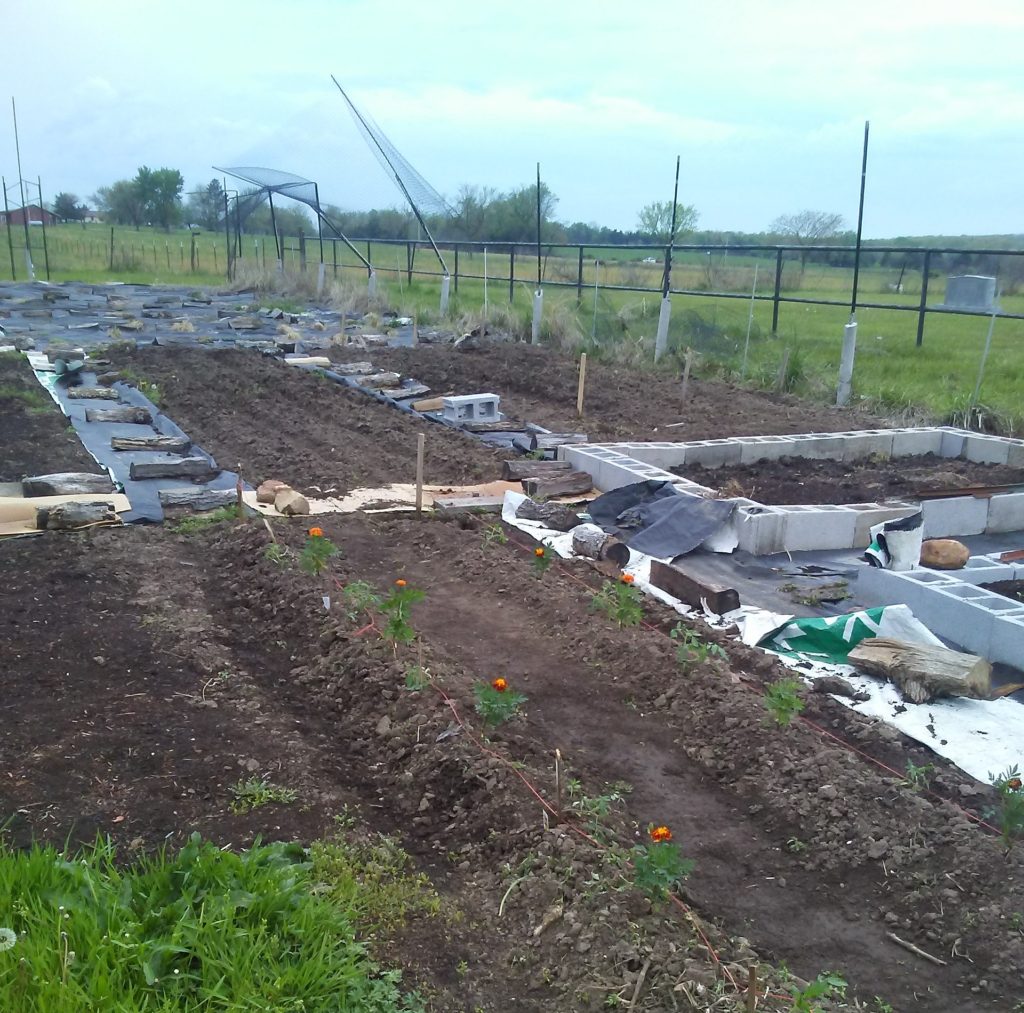
Each plant has its own personality. I don’t like peas that much, but plant them anyway because I love how they twine their little tendrils around the wires, like a baby instinctively closing a fist around a finger. And the way pole beans blindly seek something to climb on—you can see them feeling the air, reaching, joyfully wrapping (or collapsing if you don’t get around to putting up that fence. Cornstalks don’t need no support from you—they provide their own, thank you very much.
Then comes July.
The soft ground is baked to slate gray, leaves are drooping and changing color, and bugs are gleefully sharing the produce. Squash bugs don’t even share—they destroy. The first time I saw a full-size tomato worm I almost screamed. (The first hint of tomato worms is that the top branches of the plant are stripped. Color that was on the plant is now inside the worm, which why you can’t see them until—suddenly!—you can.)
Summertime is travel time, too, so the weeds took advantage of my absence to come out and play. By the time I get back, they’ve established themselves as master. It’s too much to keep up with! The garden seems to reflect my discouragement in every drying leaf and misshapen bean: we give up. Just put us out of our misery.
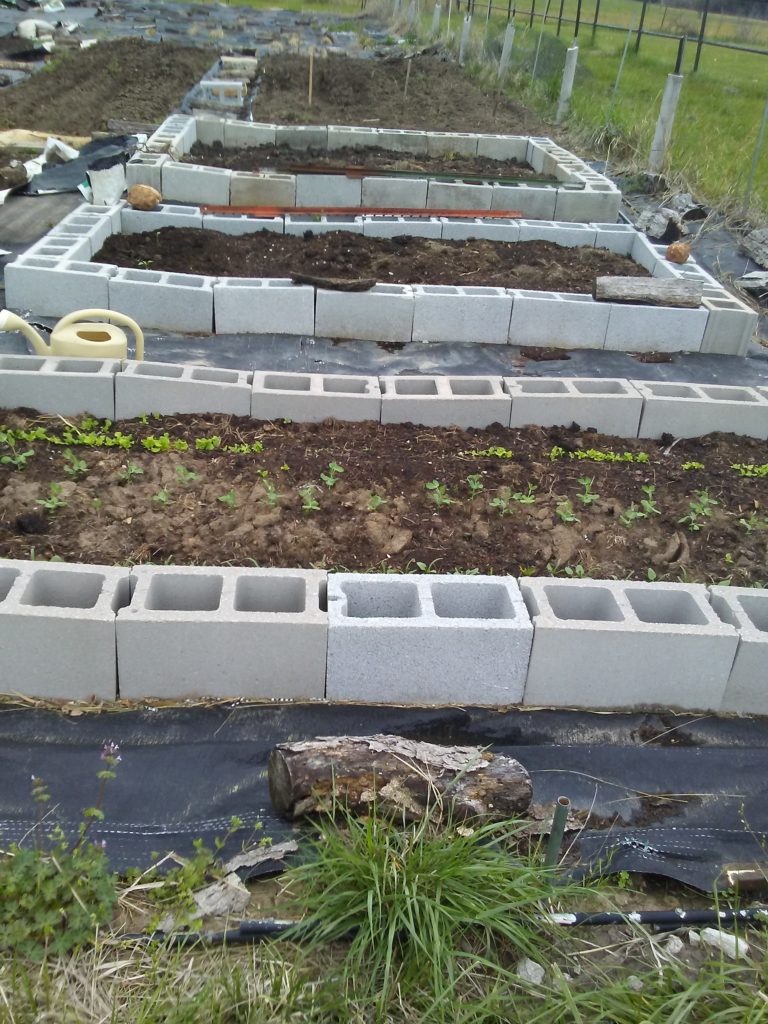
But I’m not giving up. This year will be different. Two main reasons, which I hope will provide the formula for a successful garden:
p/p + m2 = S (i.e., success)
P is for preparation divided by pickup. In all the years we’ve lived here, we haven’t owned a truck. Who needed a truck, with a trusty station wagon and a rusty trailer? The station wagon is long gone and the trailer is a pain to hook up and haul around. So this year, this pickup:
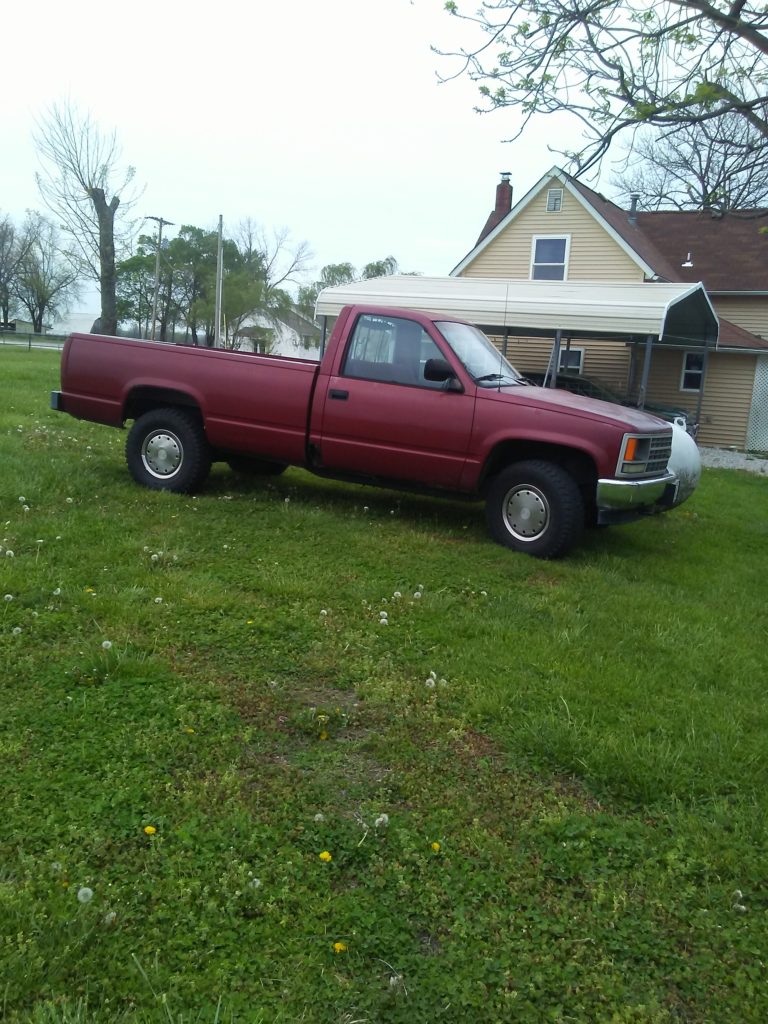
Which makes hauling manure and compost a snap. (Unloading it is not so snappy, but getting it someplace to unload was the real challenge, now solved.)
M is for maintenance x maintenance. Once we’re all planted, one hour/day should keep the weeds down and the produce up. Maybe some extra watering at sundown, if needed. Bugs are a given, but if I ride herd on them maybe they won’t ride herd on me. No travel plans either, so no big gaps in the maintenance continuum.
Wishful thinking? Well, we’ll see.
If the main point was food for the table, no cost/benefit analysis would stand for it in these days of plenty. Gardening is about exercising dominion over creation, as humans were created to do. I suspect that’s why it strikes a chord in so many hearts—at least the hearts of those who don’t have to do it. (Subsistence farmers may just as often have their hearts broken.) It’s a skill and an art and takes a bit of time and experience to learn. I hope I’ve put in enough time and experience by now because I don’t have much left of either.
This summer, I hope to walk into the garden in the cool of the morning, with a touch of the same wonder felt by the first gardeners. Their experience went awry, giving us thorns and weeds and earning our bread by the sweat of our brow. But a new day was on the way:
On the third day the friends of Christ coming at daybreak to the place found the grave empty and the stone rolled away. In varying ways they realized the new wonder; but even they hardly realized that the world had died in the night. What they were looking at was the first day of a new creation, with a new heaven and a new earth; and in a semblance of the gardener God walked again in the garden, in the cool not of the evening but of the dawn.
G.K. Chesterton
Gardening is an act of faith. There’s always another dawn, another spring, another Easter—until there isn’t. When all those things cease, we’ve reached our goal and can happily lay down our trowels and rakes. Unless there’s gardening in heaven, too. I wouldn’t be surprised.




 Take “reflection.” Aside from the myth that gives “narcissism” its name, this form of idolatry is a cartoon image, the smitten individual gazing at himself in a mirror while surrounded by fluttering hearts. We’re too sophisticated for that, or almost. I’m old enough to remember a video that made the rounds during the 2004 election: John Edwards, the Democrat candidate for V-P, taking 14 minutes to comb his hair in front of a mirror just before his one televised debate. (To be fair, he possessed exceptional hair.)





 insinuating. It owes much of its appeal to the uprush of coolness after a hot day: the sort of dramatic, built-in contrast that could make even cream soda taste riveting. But even without the drama, summer has enough singular virtues to shine: the fresh-cut grass varieties are ravishing; the post-rains deeply satisfying. The dew-at-nightfall labels can be a tad overdone, except for those who enjoy sweet. Of course, those sticky, clinging vintages that don’t lighten up at the end of the day should be outlawed. Fortunately, those are few (at least where I live). More than any other season, summer air links us to childhood–common to all varieties is the lingering aftertaste of chasing fireflies in the field. This reminiscence is the virtue that covers a multitude of sins.
 But to my taste, the finest and purest vintages are the Winters. Remarkably consistent, yet never repetitive, best enjoyed through a window raised a couple of inches in a slightly overheated room. The draft created by a well-stoked wood stove draws it in like a steely stream. Like the summer varieties, winter owes some of its appeal to contrast. After the palate has been stifled in wood and artificial heat all day, winter air sweeps in fresher than fresh, cleaner than clean, an exaggerated, sparkly essence with no hypocrisy whatsoever. Here at the end of the yearly cycle, the master of the banquet gases through the glass and murmurs in awe, “Truly, you have saved the best until last.”